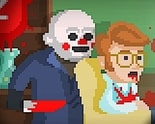
Right Click to Necromance looks like a novelty toy where you poke dead soldiers for a cheap laugh, but it plays like a real-time skirmish where one lazy click gets your formation swarmed from three sides. An enemy line falls, you right-click their bodies to pull them onto your side, and within minutes it’s clear that spacing matters more than how fast your mouse button can move.
What Right Click to Necromance Actually Asks of You
The loop reads simple on paper: enemies die, you right-click their bodies, and the corpses stand up wearing your colors. Left-click and hold to drag the clump where you want it, then let go to snap into formation before the next wave closes in. Nothing here runs on its own the way an incremental game ticks in the background; every soldier gained is a deliberate click mid-fight.
The mistake almost everyone makes is treating necromancing like a clicking contest instead of a spacing problem.
New players mash right-click on every corpse the moment a fight ends, dragging their whole blob into the open just as a second enemy group arrives from the flank. Holding position and sweeping up bodies once a skirmish finishes keeps the army defensible. Treating it as a formation puzzle rather than a reflex test means lasting noticeably longer than players chasing every kill the instant it happens.
Building the Undead Army From Five Corpses
You start with five basic soldiers and nothing else, so the first couple of skirmishes feel trivial. Once you’ve raised a second cluster of swordsmen, the opposition quietly gets tougher, and that’s usually when a wizard or golem shows up among the corpses worth grabbing. By the time you’re necromancing advanced swordsmen instead of the basic tier, the army stops feeling like extras and starts feeling worth protecting.
Swordsmen come in three escalating tiers and form the bulk of any army. The wizard is the only ranged unit in the roster, so players hunt for one instead of grabbing the nearest corpse. Mini golems and golems are the heavy-hitters, slow to acquire but strong enough that a stacked trio gets nicknamed “giants,” an unofficial trophy.
There’s no shop and no currency spent the way a typical clicker would; the economy is bodies on the ground and whether you reach them first. That only becomes obvious once you realize the game never gives you anything to spend, only things to grab.
The Frame Rate Problem and Other Things Right Click to Necromance Never Fixed
This started as a 48-hour jam prototype, and it shows in ways longtime players bring up often. The most cited issue: enemy spawn rate ties to your frame rate instead of a fixed timer, so on a high-refresh monitor, enemies pour in faster than the pace the game was built around. It’s jank you only notice across different setups, a documented complaint rather than a guess about balance.
There’s also no ending screen and no formal win state.
Difficulty escalates until your army is hit from multiple sides and worn down, which some players find tense and others frustrating once it turns unmanageable. Community shorthand: a cluster of soldiers is “the swarm,” raising bodies is necromancing regardless of unit type, and corpse count gets treated like a score the game never tallies. Some come for the puzzle of holding formation against escalating odds, while others enjoy watching the undead spiral into chaos and don’t mind losing messily.
Is there a way to win Right Click to Necromance?
No, there’s no built-in win state. Players set their own finish line, and a common one in the comments is fielding three golems, jokingly called giants, and calling that a personal victory before the swarm catches up.
Why do enemy waves suddenly feel unfair?
That spike usually isn’t in your head. Since spawn timing ties to frame rate rather than a fixed clock, smoother setups see enemies arrive faster than intended, a known quirk rather than a difficulty setting you missed.
Right Click to Necromance never got polished past its jam-built state, and it doesn’t pretend to; there’s no currency, no ending, and no guarantee your army survives the next wave. What keeps people coming back is that short, chaotic window where a well-positioned line of raised soldiers actually holds, right up until three giants and a wizard are all that’s left standing.